
← Terraforming · Climate intervention
Ocean alkalinity enhancement
Add alkalinity so seawater can hold more CO₂ as bicarbonate. Chemistry, not iron-fed plankton blooms. Still research: measurement and ecology are the hard parts.
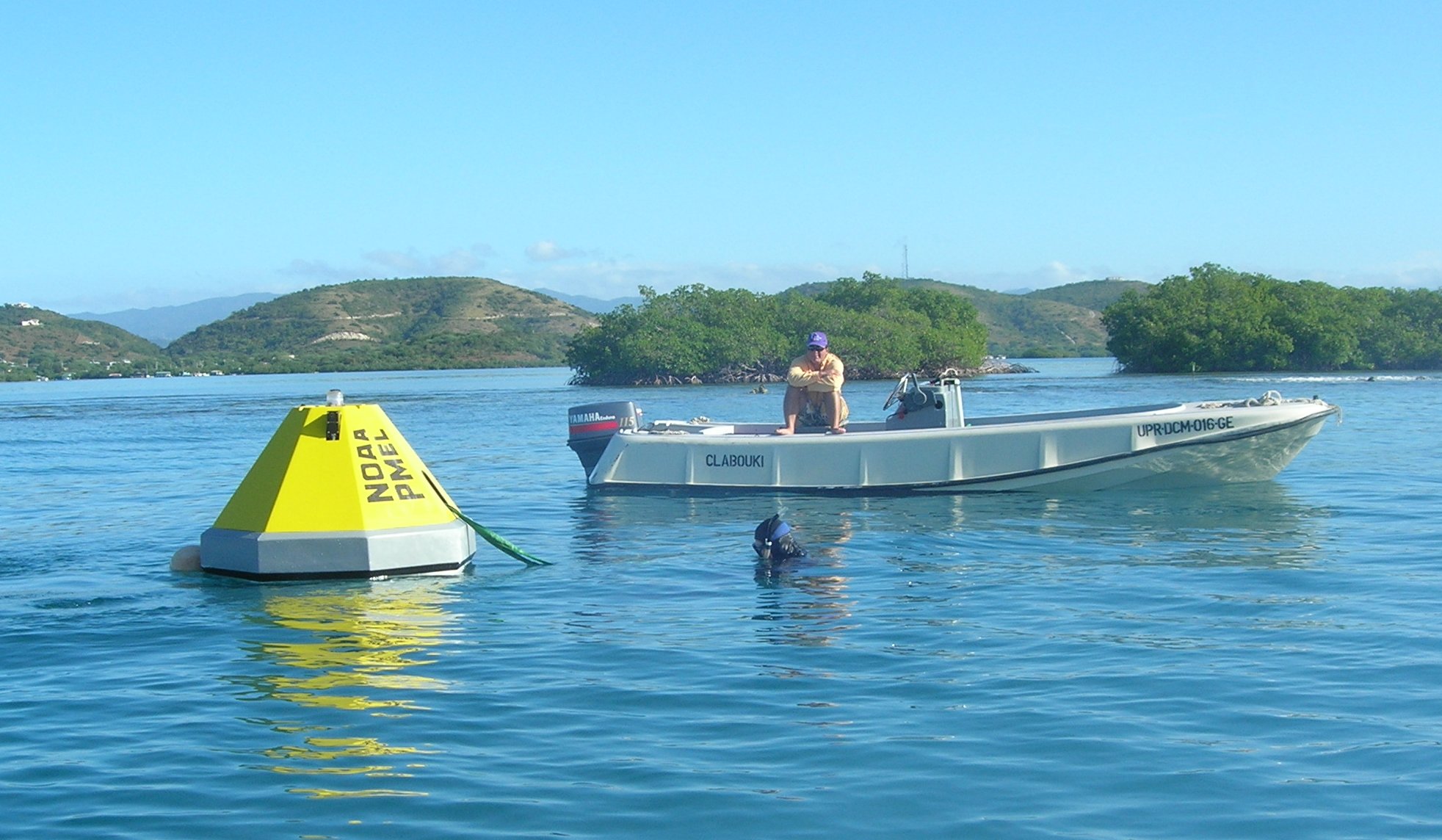

Jurisdiction: Research groups / NOAA-supported mCDR trials (no commercial planetary licence)
Years / status: Ocean alkalinity enhancement (OAE); National Academies ocean CDR research strategy; NOAA Ocean Acidification Program CDR overview; NOPP marine CDR awards. Status: research.
The plan
OAE raises seawater alkalinity (mineral addition or electrochemical routes) so the ocean can take up more atmospheric CO₂ and store it mainly as dissolved bicarbonate/carbonate on long timescales. Unlike ocean iron fertilization, the lever is carbonate chemistry, not a stimulated bloom. NOAA notes a possible local co-benefit against acidification, and a long list of unknowns.
Construction / status
Lab work, models, and early field trials. NOAA’s Ocean Acidification Program hosts CDR context pages; NOPP has funded multi-agency marine CDR projects including OAE field and lab studies. The National Academies’ ocean-based CDR strategy treats OAE as a priority research track, not a finished climate service. London Convention/Protocol politics that constrain iron fertilization are a reminder that marine interventions need lawful assessment: do not imply OAE is already waved through.
What went wrong, or only partly worked
Documented: chemical principles and small-scale experiments showing alkalinity additions can increase CO₂ uptake in controlled settings; early trial reports remain limited in space and time. There is no verified gigatonne planetary removal ledger from OAE deployment.
Lessons
Lifecycle emissions of mining, grinding, shipping, or electrochemistry can erase net removal if ignored. Trace metals, particle plumes, and ecosystem responses need monitoring. Do not merge this card with ocean iron fertilization. Do not call OAE a substitute for cutting emissions.
Sources
NOAA Ocean Acidification Program Carbon Dioxide Removal page; NOAA / NOPP marine CDR research awards overview; National Academies A Research Strategy for Ocean-based CDR catalog; NOAA Science Advisory Board draft CDR research strategy PDF.