
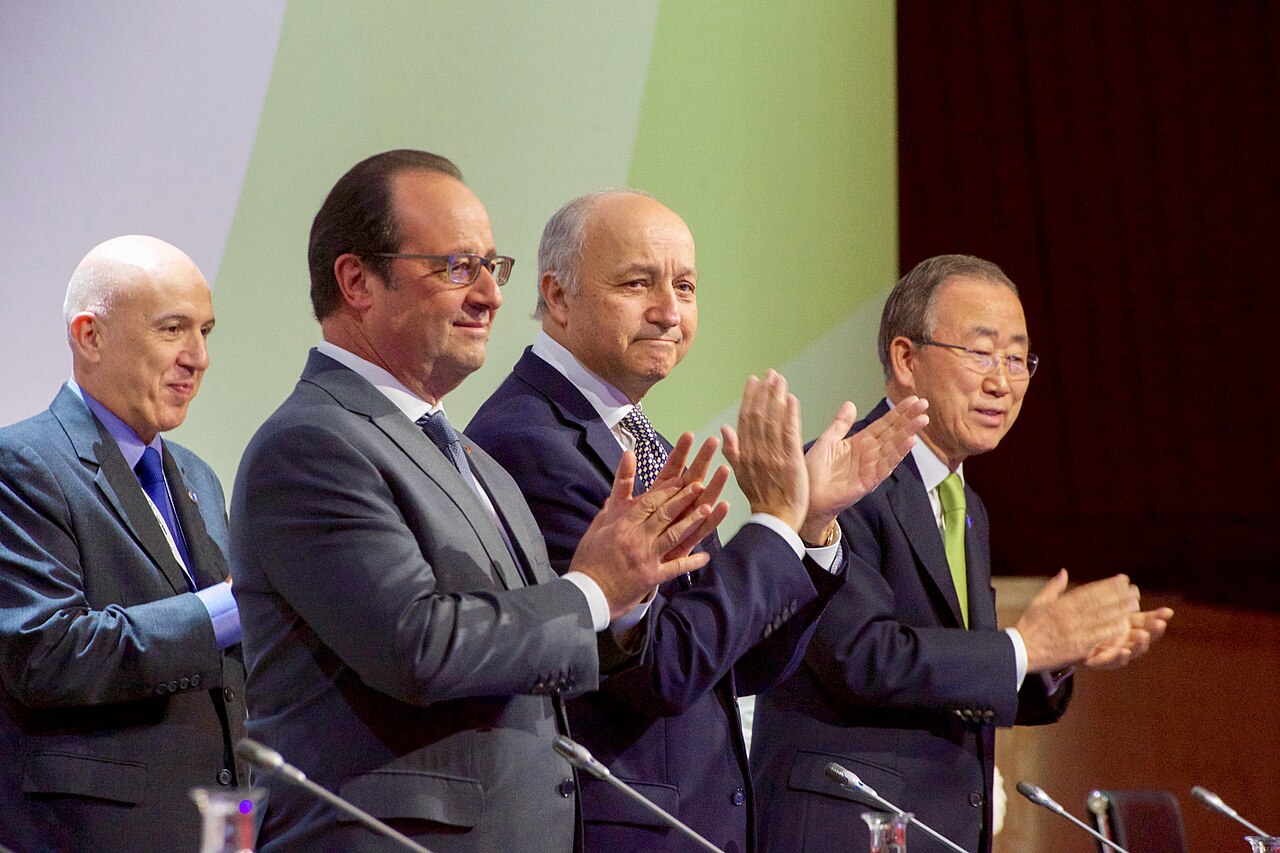

Official name: Paris Agreement
Citation: Paris Agreement under the UNFCCC; adopted 12 December 2015 (COP21); entered into force 4 November 2016
Year / status: Adopted 12 December 2015 (COP21). Entered into force 4 November 2016.
What it does
A legally binding treaty under the UNFCCC. Parties submit nationally determined contributions (NDCs), report progress, and take stock together. The Agreement’s temperature language aims to hold warming well below 2°C above pre-industrial levels and pursue 1.5°C. It also covers adaptation, finance, technology, and sinks (including forests): in treaty form, not as a voluntary pledge sheet alone.
Where it applies / status
Applies to Parties that have ratified or otherwise consented. Adopted at COP21 in Paris (12 December 2015); entered into force 4 November 2016. UNFCCC and the UN Treaty Depositary keep the authoritative party list. Withdrawal and re-accession rules exist; treat membership as a living depositary fact, not a slogan.
Documented benefits or intended effects
Intended effects: align national climate plans under one treaty architecture, create a five-year ambition cycle, and put 1.5°C into multilateral law. Outcomes depend on NDC content and domestic implementation: the treaty does not itself shut a power plant.
Caveats
NDCs are nationally determined; the Agreement does not prescribe identical economy-wide caps for every Party. Temperature goals are collective aims, not a court-enforceable global carbon budget inside the text. Do not confuse Paris with the Kyoto Protocol’s earlier Annex-I quantified targets.
Sources
UNFCCC page on the Paris Agreement; UNFCCC English PDF of the Agreement; UN Treaty Depositary record.