
Escazú Agreement
The regional environmental democracy treaty for Latin America and the Caribbean. It gives the public rights to environmental information, participation in decisions and access to justice, and it includes specific duties to protect people who defend the environment. The United Nations Treaty Collection lists 19 Parties and 24 signatures.
Official name: Regional Agreement on Access to Information, Public Participation and Justice in Environmental Matters in Latin America and the Caribbean
Citation: Regional Agreement on Access to Information, Public Participation and Justice in Environmental Matters in Latin America and the Caribbean; adopted at Escazú, Costa Rica, on 4 March 2018; entered into force on 22 April 2021
Year / status: Adopted at Escazú, Costa Rica, on 4 March 2018. Entered into force on 22 April 2021.
What it does
The Escazú Agreement is a binding regional treaty negotiated under the Economic Commission for Latin America and the Caribbean. It was adopted in Escazú, Costa Rica, on 4 March 2018, opened for signature at United Nations Headquarters from 27 September 2018 to 26 September 2020, and entered into force on 22 April 2021, ninety days after the eleventh instrument of ratification, acceptance, approval or accession was deposited. The Commission serves as the secretariat. The Agreement is open to the thirty-three Latin American and Caribbean countries listed in its Annex 1.
Where it applies / status
Each Party carries out the Agreement through its own laws and institutions, guided by the treaty text and by decisions of the Conference of the Parties. A Committee to Support Implementation and Compliance assists Parties. Trinidad and Tobago deposited its instrument of accession on 27 January 2026. At its status date of 1 October 2026 the United Nations Treaty Collection (Chapter XXVII, No. 18) showed 24 signatures and 19 Parties, the same totals that the Commission's Escazú Agreement page gave when checked on 2 October 2026. The depositary page holds the current list.
Documented benefits or intended effects
The Agreement turns three procedural rights into regional law: access to environmental information, public participation in environmental decision-making, and access to justice in environmental matters. It also obliges Parties to guarantee a safe and enabling environment for persons, groups and organisations that promote and defend human rights in environmental matters, and to take measures to recognise, protect and promote their rights. Together these provisions give people in the region a legal basis to ask for information, to take part in decisions and to seek a remedy.
Caveats
Only States among the thirty-three countries of Latin America and the Caribbean listed in Annex 1 may become Parties. Several signatories have not yet ratified, and some countries in the region have neither signed nor acceded. Guatemala informed the depositary on 20 December 2022 that it does not intend to become a Party, so its signature creates no legal obligations. The Agreement's rights concern procedure and the protection of environmental defenders; pollution limits and species lists come from national law. National courts and agencies decide concrete cases.
Sources
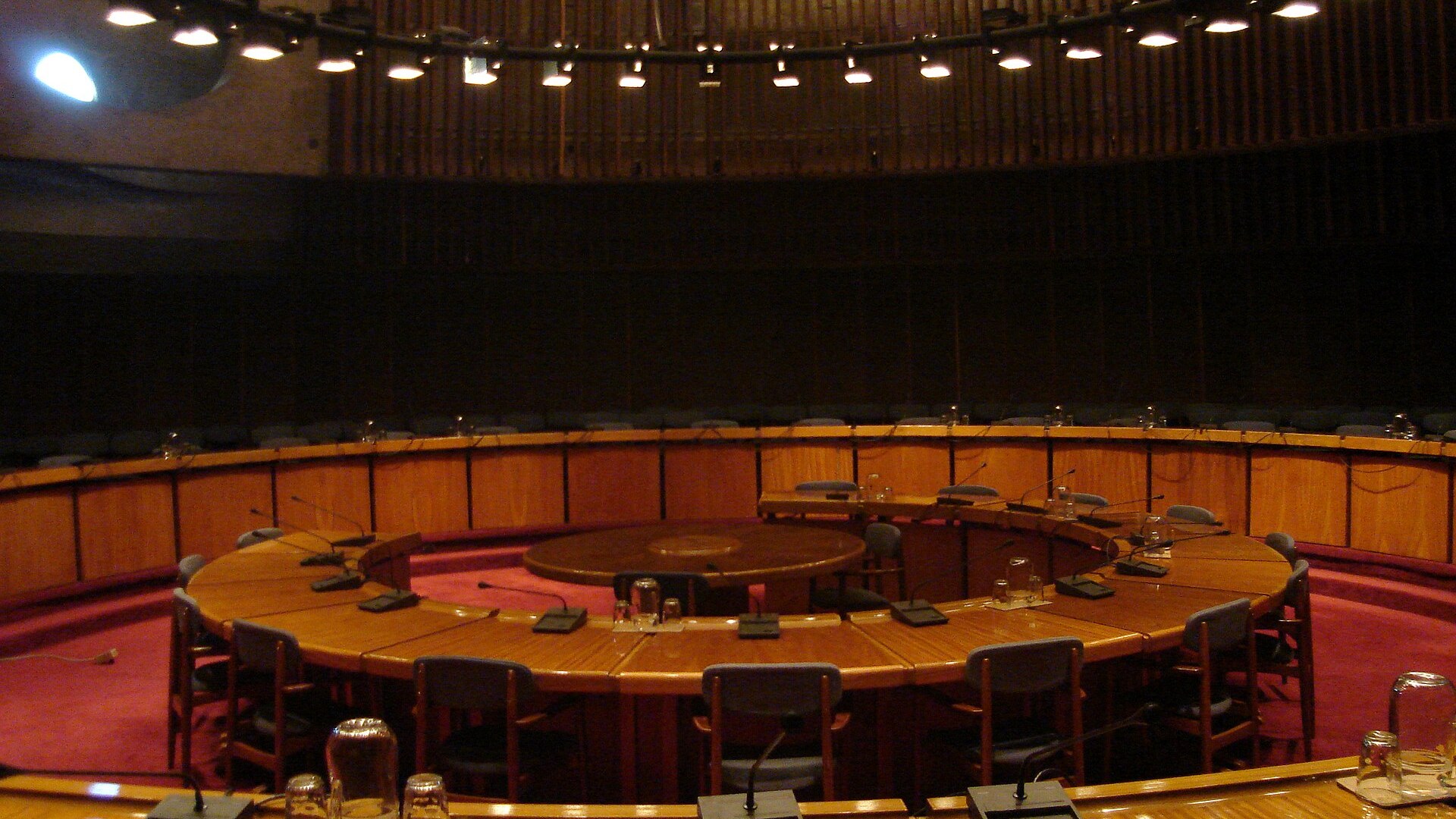
The Commission's Escazú Agreement page, the United Nations Treaty Collection record, and the photograph.
- Economic Commission for Latin America and the Caribbean: Regional Agreement on Access to Information, Public Participation and Justice in Environmental Matters in Latin America and the Caribbean (Escazú Agreement)
- United Nations Treaty Collection: Escazú Agreement (Chapter XXVII, No. 18)
- Wikimedia Commons: CEPAL building (photo)
