

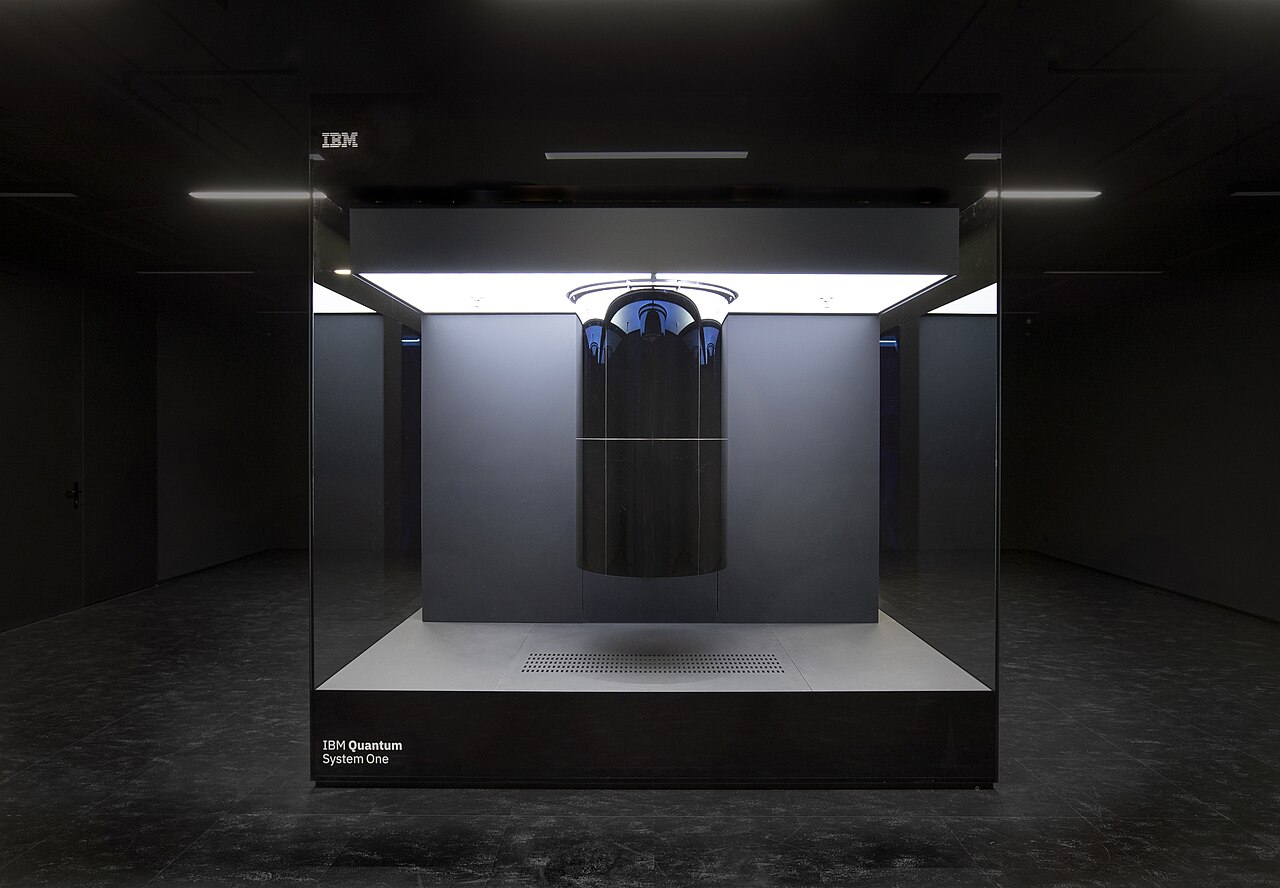
Image: IBM Research ( CC BY 2.0 )
.jpg)
What it is
Quantum computers use superposition and entanglement to explore some problems that scale badly on ordinary chips: in theory, the electronic structure of molecules is one. IBM has published multi-hundred- to thousand-qubit superconducting processors (including Condor in 2023) and smaller, higher-quality Heron chips. Google’s Willow processor (2024) reported error-correction progress. IonQ uses trapped ions. All of this is research hardware in the NISQ-to-early-fault-tolerant era.
Problem it targets
Fertilizer, batteries, and carbon chemistry are quantum-mechanical at the atom. If a fault-tolerant machine could simulate a catalyst that does not exist yet, that would matter. We do not have that machine.
How it works
Superconducting qubits sit in a dilution refrigerator. Ions sit in electromagnetic traps. Error rates are still high; useful chemical accuracy needs error correction and careful problem mapping. A press-tour “quantum advantage” on an artificial task is not an ammonia reactor.
Status and players
IBM, Google Quantum AI, IonQ, Quantinuum, academic groups. Chemistry partners (Boeing, Mercedes, national labs) run exploratory algorithms. Public milestones are real; product claims should be dated and narrow.
Risks and limits
Hype cycles, export controls, and energy use of the control stack. Do not write science-fiction about instant climate models. Classical high-performance computing still does the climate work.
Sources
Google Willow announcement (9 Dec 2024); IBM Quantum pages. Public machines have not designed a climate catalyst.