

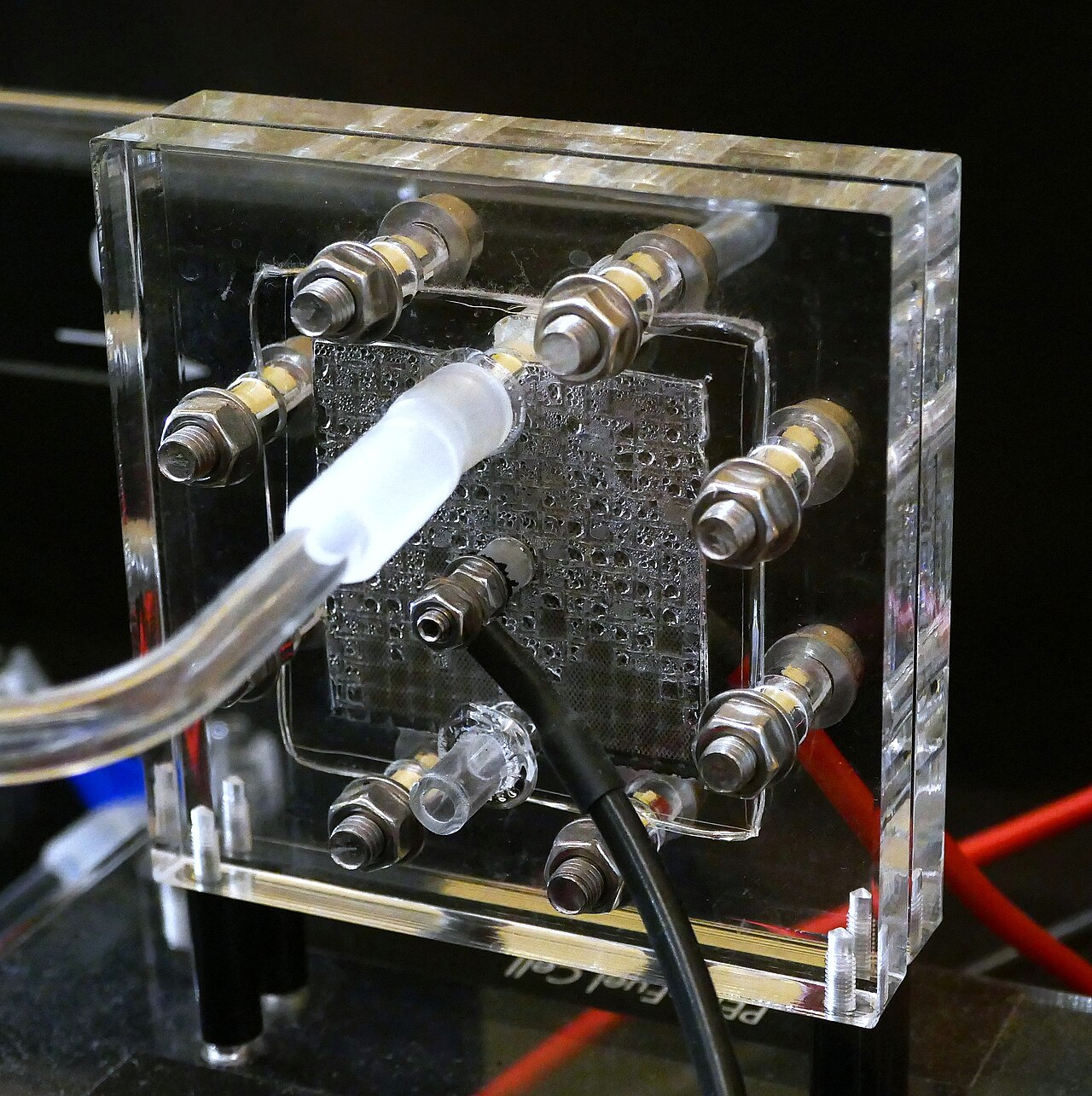
Image: Tiia Monto ( CC BY 4.0 )

What it is
Proton-exchange-membrane electrolyzers use platinum-group metals, especially scarce iridium on the oxygen side. Labs (NREL and many universities) grow nanoparticles, core-shell crystals, and nanostructured supports so that each metal atom does more work. Some low-iridium or non-precious recipes work in beakers; few have years of industrial hours.
Problem it targets
If electrolysis is going to make steel and ammonia cleaner, the stacks must get cheaper and less dependent on a tiny iridium market. That is a materials problem, not a perpetual-motion problem.
How it works
High surface area and the right crystal face raise activity. Durability under acid and high current is the usual failure. Membrane (Nafion-class ionomers) and porous transport layers are the rest of the sandwich.
Status and players
NREL hydrogen and fuel-cell materials groups; industrial stack makers listed on IEA electrolyzer pages; academic groups publishing in Nature Energy and Joule.
Risks and limits
Lab current density that dies in 100 hours. Patent fog. Confusing a catalyst paper with a gigawatt factory.
Sources
U.S. DOE hydrogen; IEA electrolysers tracking. A catalyst paper is not a gigawatt factory.