Image: Oak Ridge National Laboratory ( CC BY 2.0 )
.jpg)
What it is
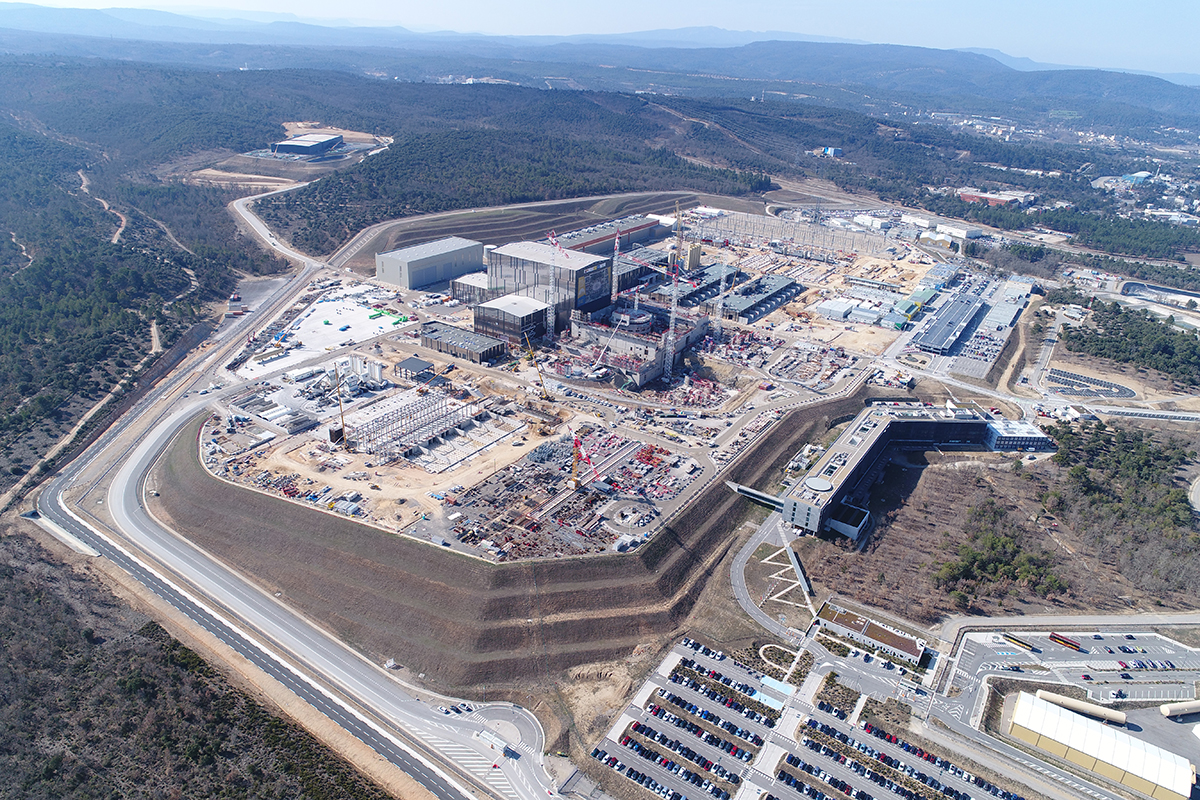
ITER is a tokamak under construction at Cadarache, France, funded by China, the EU, India, Japan, Korea, Russia, and the United States. The machine is designed to produce a burning deuterium-tritium plasma and to study whether a fusion gain well above one is possible at reactor-relevant scale. It will not sell electricity.
Problem it targets
Fossil fuels still dominate heat and power. Fusion promises dense, low-carbon energy without long-lived spent fuel of the fission kind: if a plant can run, breed tritium, and survive neutron damage. None of that is demonstrated on the grid.
How it works
Superconducting magnets confine a hot plasma in a doughnut. Heating systems push it toward the temperatures where D-T fusion is likely. The 2016 schedule once aimed at first plasma in 2025; later baselines slipped that date after manufacturing defects, COVID, and cost growth. Public briefings in the mid-2020s point to first plasma later in the 2030s and deuterium-tritium still later. Treat any “unlimited commercial fusion this decade” line as marketing.
Status and players
ITER Organization and seven Members. Private tokamak and stellarator firms (Commonwealth Fusion, Tokamak Energy, and others) run on a faster, riskier clock; they are not ITER and they are not online utilities.
Risks and limits
Cost, tritium supply, materials under 14 MeV neutrons, and schedule. Success at ITER would still leave a demonstration power plant to design. Failure would not end private experiments, but it would close a public path.
Sources
ITER Organization site and FAQs. The 2016 first-plasma-2025 date is obsolete; later baselines point to research operations in the 2030s.