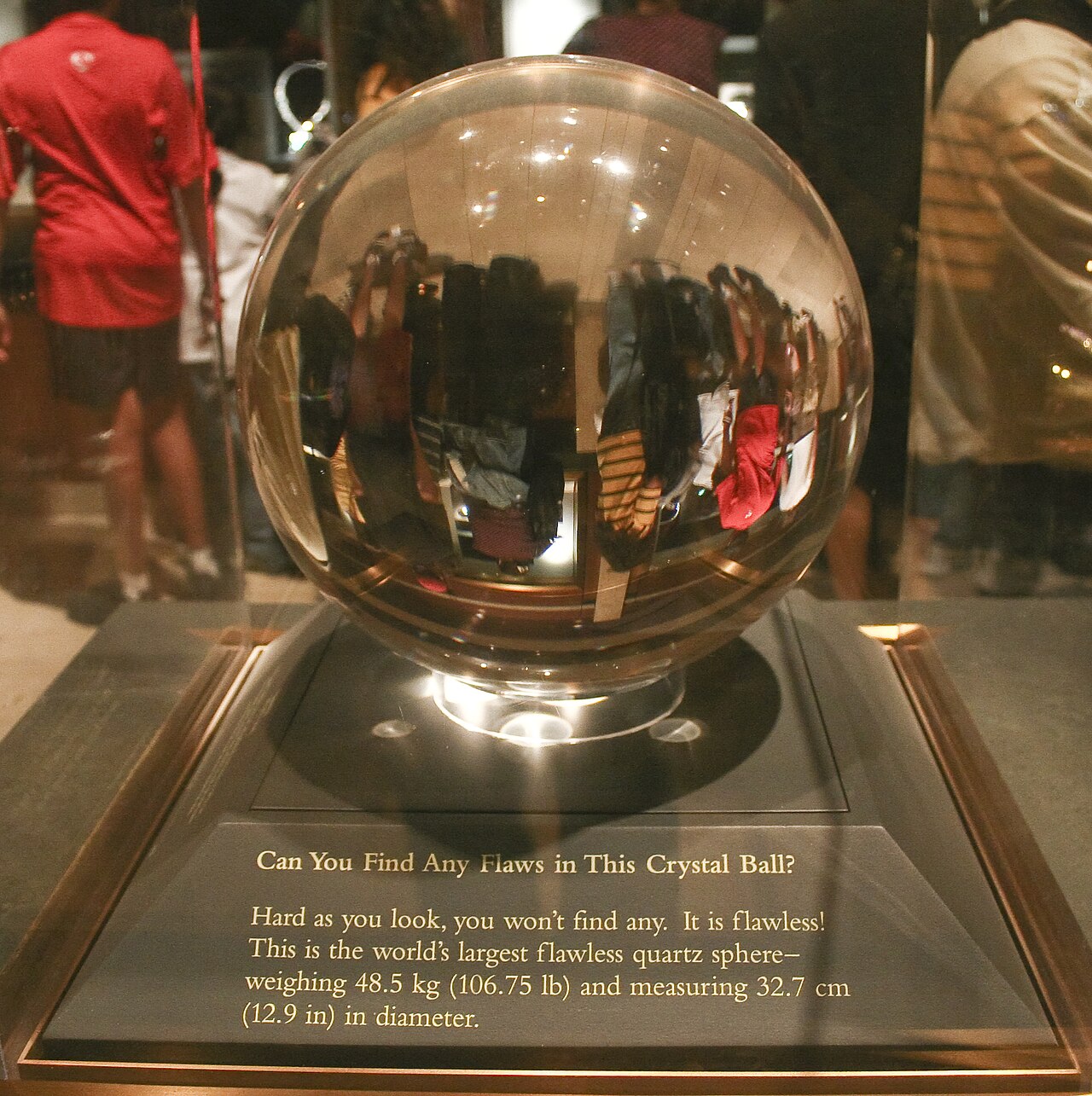
Image: Sanjay Acharya ( CC BY-SA 3.0 )

What it is
GNoME (Graph Networks for Materials Exploration), from DeepMind with Berkeley collaborators, used graph networks and existing materials databases to predict a very large set of potentially stable inorganic crystals (2023). Some predictions were later synthesized. That is a search tool, not a finished battery.
Problem it targets
Better catalysts, electrodes, and membranes are bottlenecked by how slowly humans try recipes. If climate tech needs new solids, faster screening matters: after the wet lab confirms them.
How it works
The model scores stability and, with other tools, properties. High-throughput computation and robot labs can test a slice. Most predicted crystals will be useless, unstable in air, or already known under another name. That is normal for search.
Status and players
Google DeepMind; Lawrence Berkeley National Laboratory / Materials Project; other foundation-model materials groups (Microsoft, Meta, academic labs).
Risks and limits
Paper-count inflation, “AI discovered a superconductor” headlines, and skipping toxicity and scale-up. A predicted Li-ion cathode is not a gigafactory.
Sources
Merchant et al., Nature, 2023; DeepMind GNoME page. Predicted crystals still have to be made.