

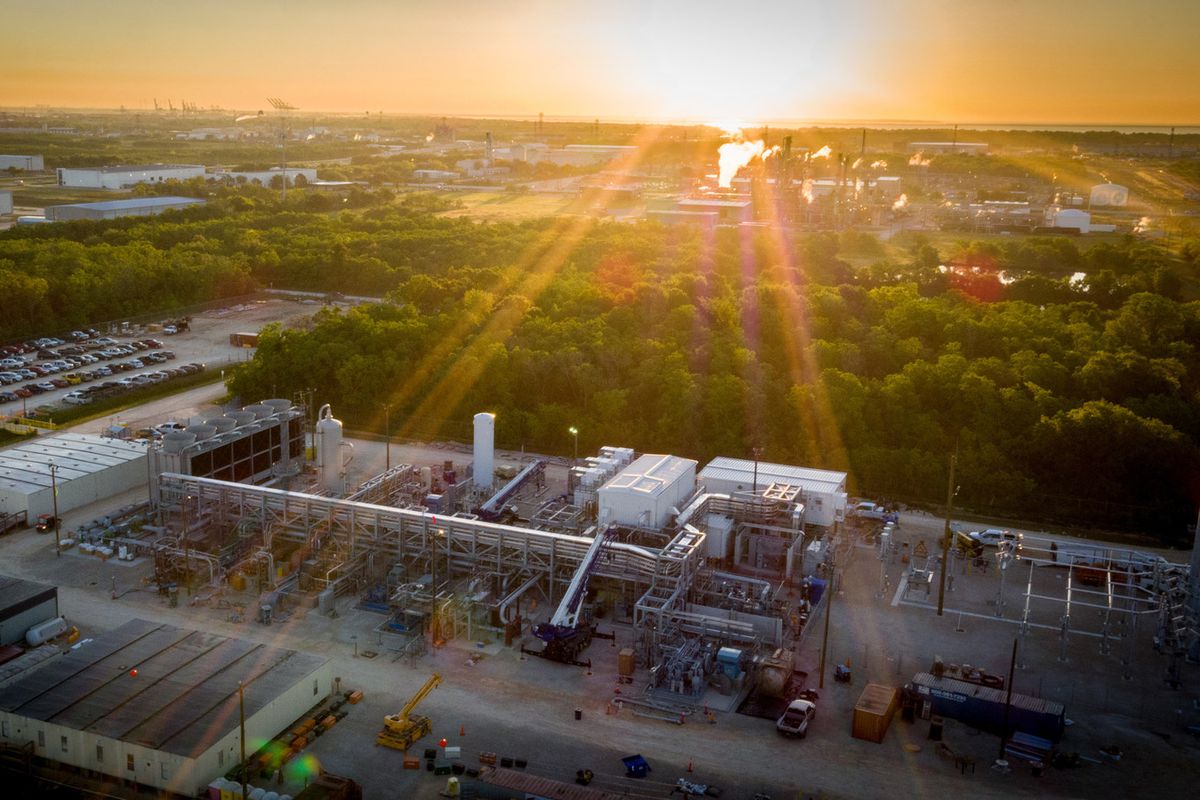
Image: Net Power Inc. ( CC BY-SA 4.0 )

What it is
Deep Sky Alpha in Innisfail, Alberta, is a multi-vendor direct-air-capture test hub. Reuters reported on 29 June 2026 that Deep Sky was the first North American company to deliver verified DAC removal credits, to Microsoft and Royal Bank of Canada, from carbon injected underground in May. The first injection was 14 tonnes; Isometric verified the credits. The Alberta pilot is expected to capture about 3,000 tonnes of CO₂ a year and is built so several DAC firms can run side by side. Deep Sky’s own site describes a five-acre industrial-park pad. Climeworks in Iceland remains the other firm that has actually issued DAC credits.
Problem it targets
Some CO₂ will still be emitted after we cut what we can. Pulling carbon already in the air is one way to shrink the stock: only if the energy is clean and the CO₂ stays stored. High-quality removal credits are scarce; many contracts have not delivered tonnes.
How it works
Fans and contactors pull ambient air through a capture process; the CO₂ is compressed and sent for geological storage (Deep Sky stores north of Edmonton, not under Innisfail). A credit is a verified tonne, not a nameplate.
Status and players
Deep Sky (Canada); early credit buyers Microsoft and RBC; further offtake names Reuters listed include TD Bank, Lufthansa, and ENGIE. Several DAC technology vendors can sit on the Alpha pads.
Risks and limits
DAC is energy-hungry and expensive. Fourteen tonnes and a 3,000-tonne nameplate are rounding errors next to national inventories. Credits can be sold faster than tonnes are stored. This is a pilot hub, not a substitute for cutting emissions.
Sources
Reuters 29 June 2026 (14 t first injection; ~3,000 t/yr nameplate; Microsoft and RBC). Nameplate is not tonnes delivered.