

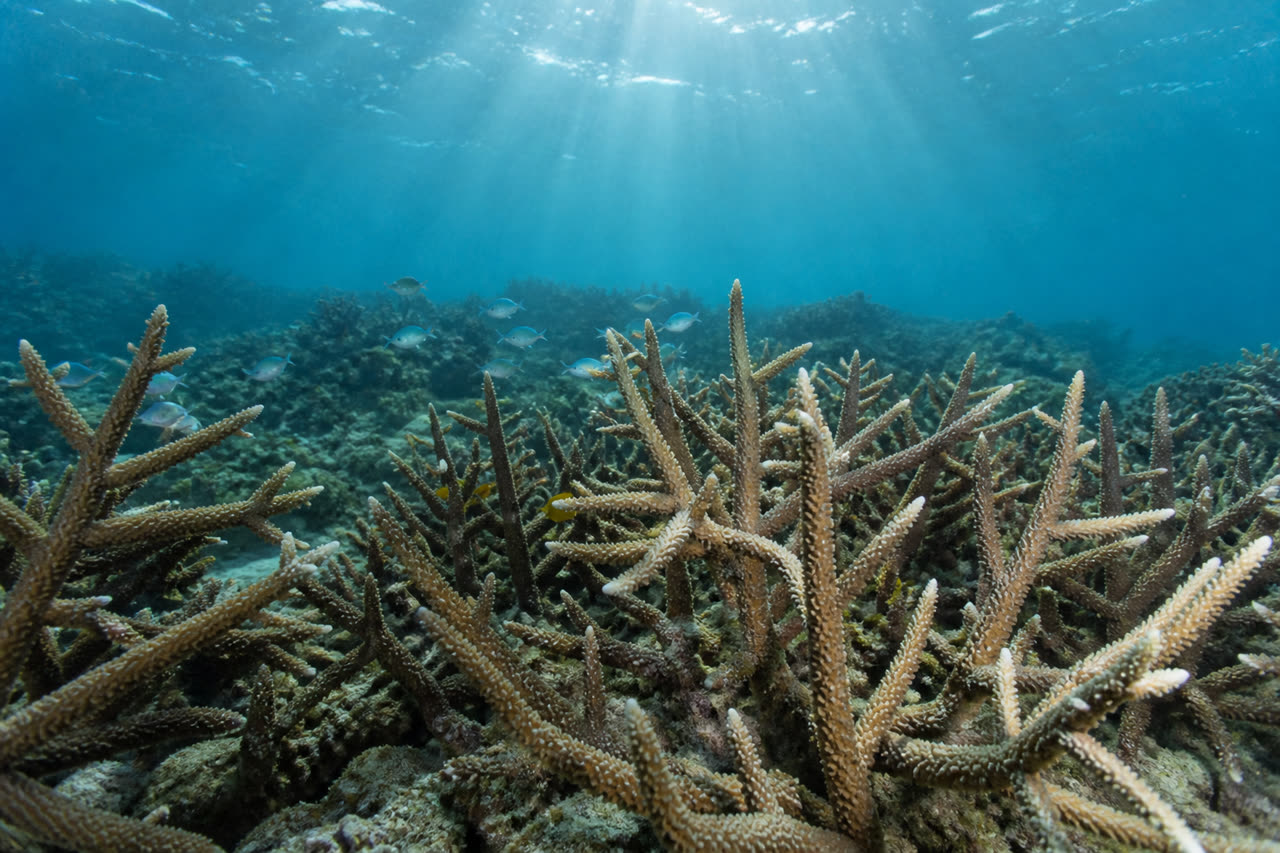
Image: Fix Planet generated documentary still: branching reef, not a named restoration project (Site asset)
What it is
Restoration kits try to put coral back on damaged reefs: land-based farms (Coral Vita), larval seeding and settlement tiles (SECORE), and modular frames such as Mars’s assisted reef restoration (“reef stars”). Fragments grow faster than a wild recruit; larvae can reseed a wider area if the water is still livable.
Problem it targets
Warming and acidification have bleached reefs in mass events (including 2023-2024 globally). Local damage: blast fishing, sediment, tourism: adds to the heat. A dead reef loses fisheries, shore protection, and a large share of marine species that need structure.
How it works
Divers or boats outplant fragments or settled larvae onto stable substrate. Some projects select for heat-tolerant colonies. Success is measured in survival and years of growth, not in press photos. The method is real; the scale is local.
Status and players
SECORE International; Mars Sustainable Solutions (MARRS) in Indonesia and elsewhere; Coral Vita (land-based farming, Bahamas); government and NGO nurseries across the Caribbean, Pacific, and Coral Triangle. NOAA and ICRI publish methods and limits.
Risks and limits
Outplants die in the next heatwave if the water stays too warm. Restoration is not a license to keep emitting. Genetics, disease, and volunteer burnout are ordinary failure modes. Treat every “we restored a reef” claim as a site, not a biome.
Sources
NOAA Coral Reef Conservation Program and Coral Reef Watch; SECORE methods. Restoration is local; heat still rules.