

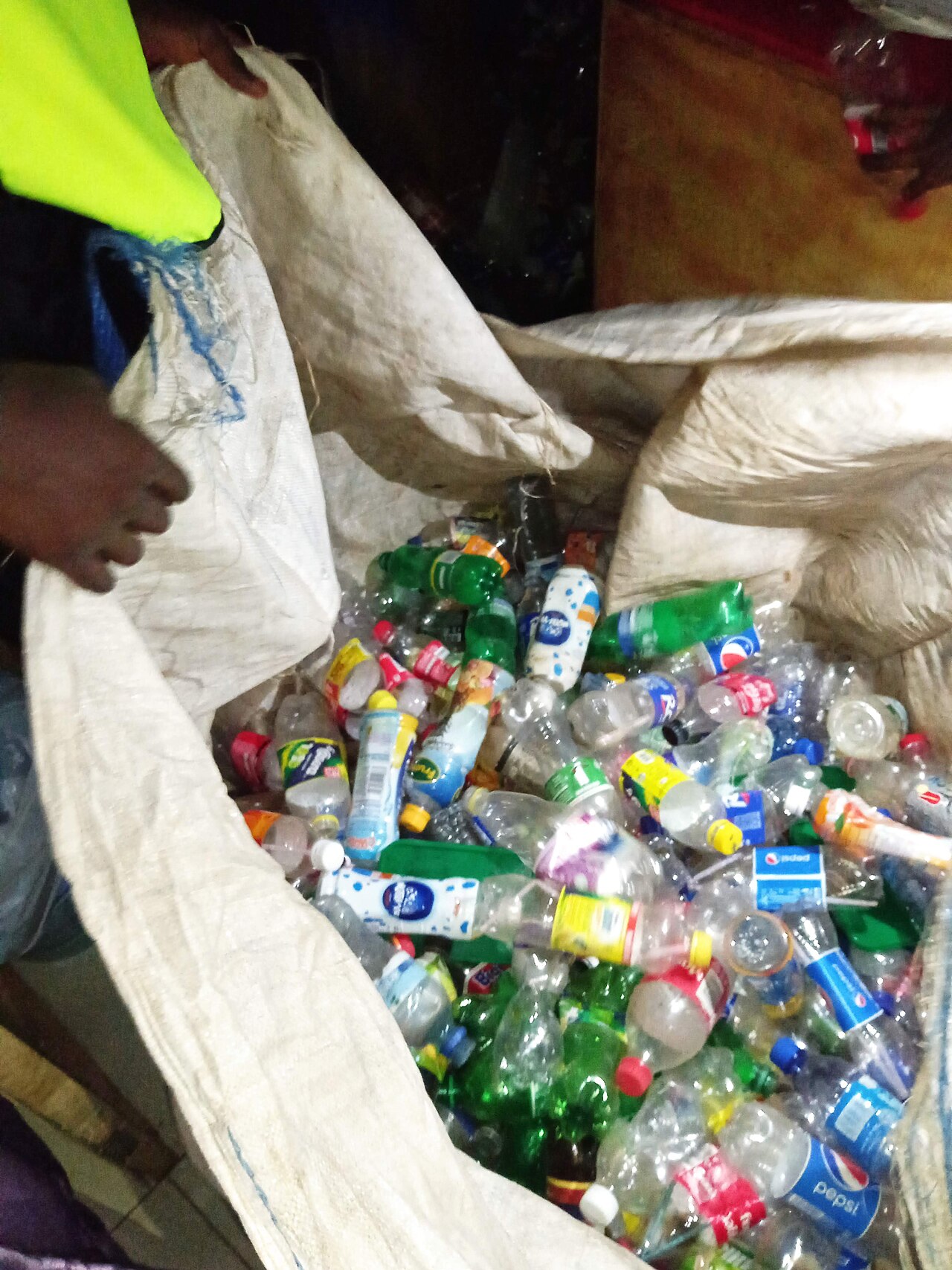
Image: SusuGeo ( CC BY-SA 4.0 )

What it is
In 2016 Yoshida and colleagues described a bacterium, Ideonella sakaiensis, that secretes PETase and can grow on PET. Engineered enzymes now depolymerize bottles and polyester textiles much faster. Carbios, a French firm, has run demonstration units and is trying to finance a first industrial plant at Longlaville (about 50,000 tonnes of prepared PET a year). By 2026 the financial close was still not done; production had been discussed for around 2028 if money arrived.
Problem it targets
Mechanical recycling of PET loses quality. Most polyester textiles are not recycled at all. A true circular monomer would let bottles and shirts become bottles and shirts again: if collection, sorting, and energy add up.
How it works
Shredded PET is mixed with an engineered hydrolase under mild heat. The polymer falls back to terephthalic acid and ethylene glycol, which can be purified and re-polymerized. It is chemistry with a protein catalyst, not a compost heap and not a magic microbe released into the ocean.
Status and players
Carbios (France) and partners (including Asian licensing talks). Academic PETase engineering continues in many labs after Yoshida et al. 2016. Collection systems remain municipal and brand-owned: the bottleneck as often as the enzyme.
Risks and limits
Feedstock must be relatively clean PET. Mixed plastic still wins by being cheap to bury or burn. Plant delays are normal for first-of-a-kind recycling. Do not confuse a demo reactor with a solved waste crisis.
Sources
Yoshida et al., Science, 2016. Official Carbios pages did not answer when checked; Wikipedia is not used as a source. Longlaville remains financing-limited as of August 2026: not an operating plant.