

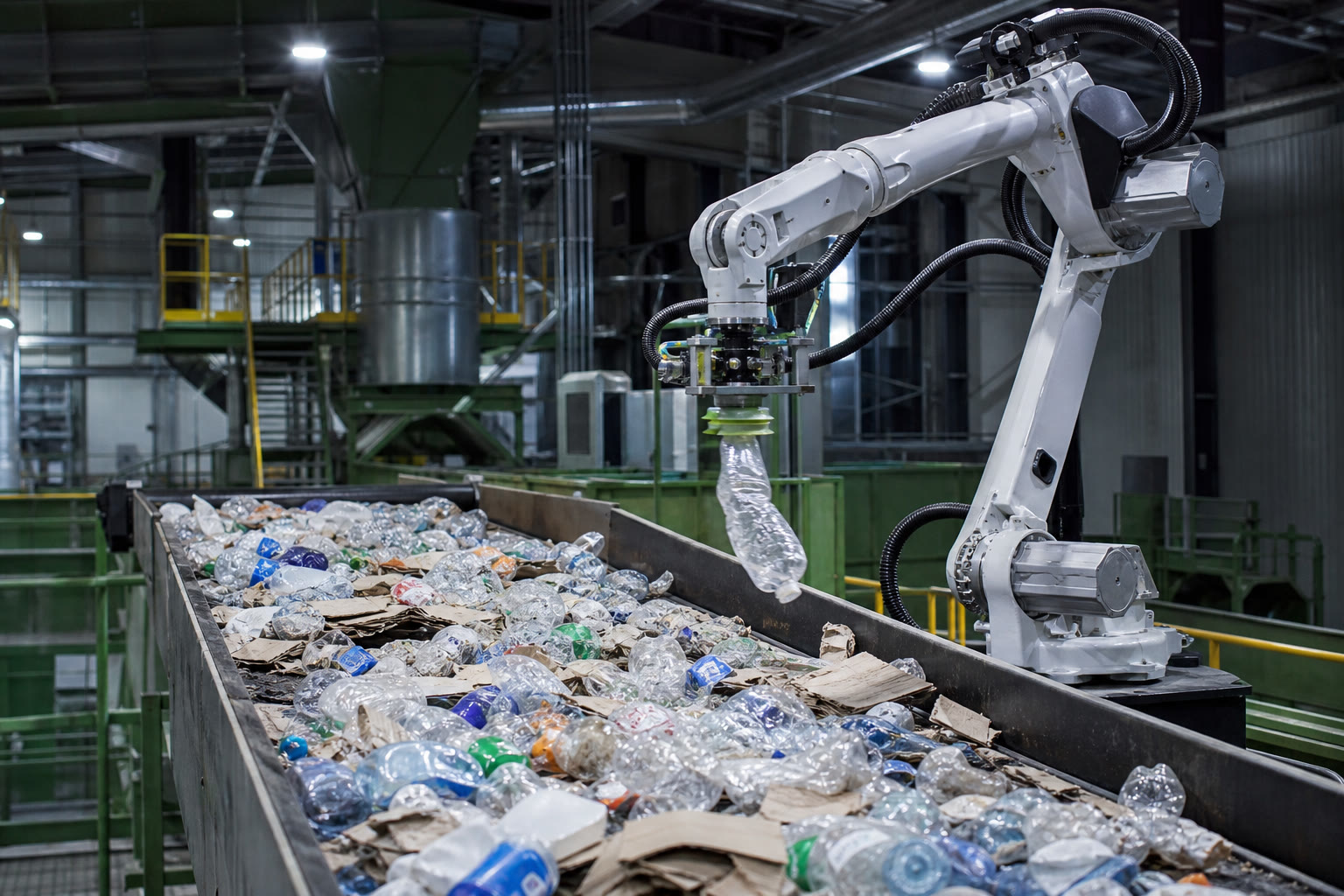
Image: Fix Planet generated documentary still of a recycling robot on a conveyor: not an AMP Robotics press photo (Site asset)
What it is
Material-recovery facilities (MRFs) have long used eddy currents and optical sorters. AMP Robotics and similar firms add computer vision and robot arms that pick specific items at human-or-better speed. Systems are installed in operating plants in the United States and other countries: deployed equipment, not a concept video.
Problem it targets
People are expensive and injured on lines; contamination ruins bales; cities want higher recycling rates. A robot that never gets bored can raise purity. It cannot create demand for mixed plastic film.
How it works
A camera classifies objects on a belt; a suction or gripper arm picks the target into a chute. The model is retrained as packaging changes. Throughput is measured in picks per minute, not in “AI.”
Status and players
AMP Robotics; competitors in Europe and Asia; traditional optical-sorter firms (TOMRA and others) that now ship their own ML. Waste firms and municipalities are the buyers.
Risks and limits
If the offtake mill closes, the robot sorts into a landfill-bound bunker. Export bans and cheap virgin plastic still set the economics. This is sorting, not alchemy.
Sources
AMP Sortation / AMP Robotics company site. Sorting is not a market for the bale.