
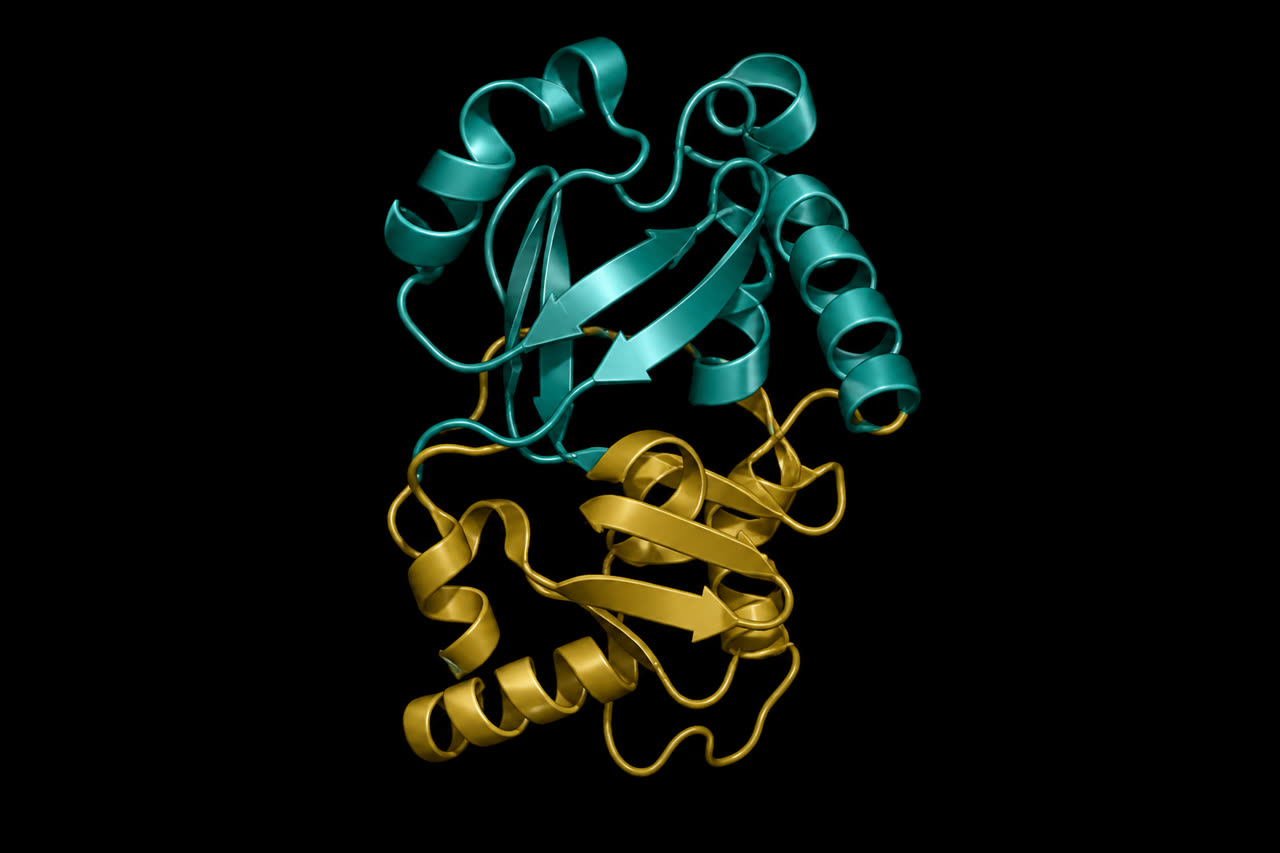
Image: Fix Planet generated molecular ribbon: not a named AlphaFold prediction (Site asset)
What it is
AlphaFold 2 (DeepMind, Nature, 2021) predicted single-chain folds at useful accuracy; the public AlphaFold Database put hundreds of millions of structures in reach. AlphaFold 3 and AlphaFold Server launched on 8 May 2024 to predict proteins with other biomolecules. DeepMind’s AlphaFold page says that by November 2025 the tools were used by over 3 million researchers in over 190 countries. Hassabis and Jumper shared the 2024 Nobel Prize in Chemistry for the work. This is deployed science software, not a chatbot and not a factory.
Problem it targets
Enzymes that eat plastic, fix nitrogen more cleanly, or capture carbon are protein-design problems. Knowing a fold or a complex is not the same as a stable, cheap industrial enzyme, but it removes a years-long bottleneck.
How it works
The model learned from the Protein Data Bank and related data. Laboratories still express, purify, and assay. Design tools generate new backbones; wet-lab failure remains common.
Status and players
Google DeepMind, Isomorphic Labs, and EMBL-EBI; Meta ESM and the Baker lab sit in the same toolbox; industrial biotech uses the stack on enzymes and drugs.
Risks and limits
Biosecurity (the same tools can sketch harmful proteins). Over-claiming a predicted PETase as a recycling plant. Energy and water of the fermenter still count.
Sources
DeepMind AlphaFold page (AF3 / Server 8 May 2024; November 2025 usage figures are DeepMind’s). A predicted fold is not an industrial enzyme.